
20 June 2026 · 4 min
If you have ever worn a temporary crown for two weeks — while a lab across town did its part — you remember the unpleasant impression, the waiting, and the second visit. In a fully digital practice, that process looks entirely different.
Where do those two weeks go?
Conventional crown-making has three analogue bottlenecks: the impression (which distorts), the plaster model (which chips and needs drying), and the courier run to the lab and back. A digital chain simply deletes them.
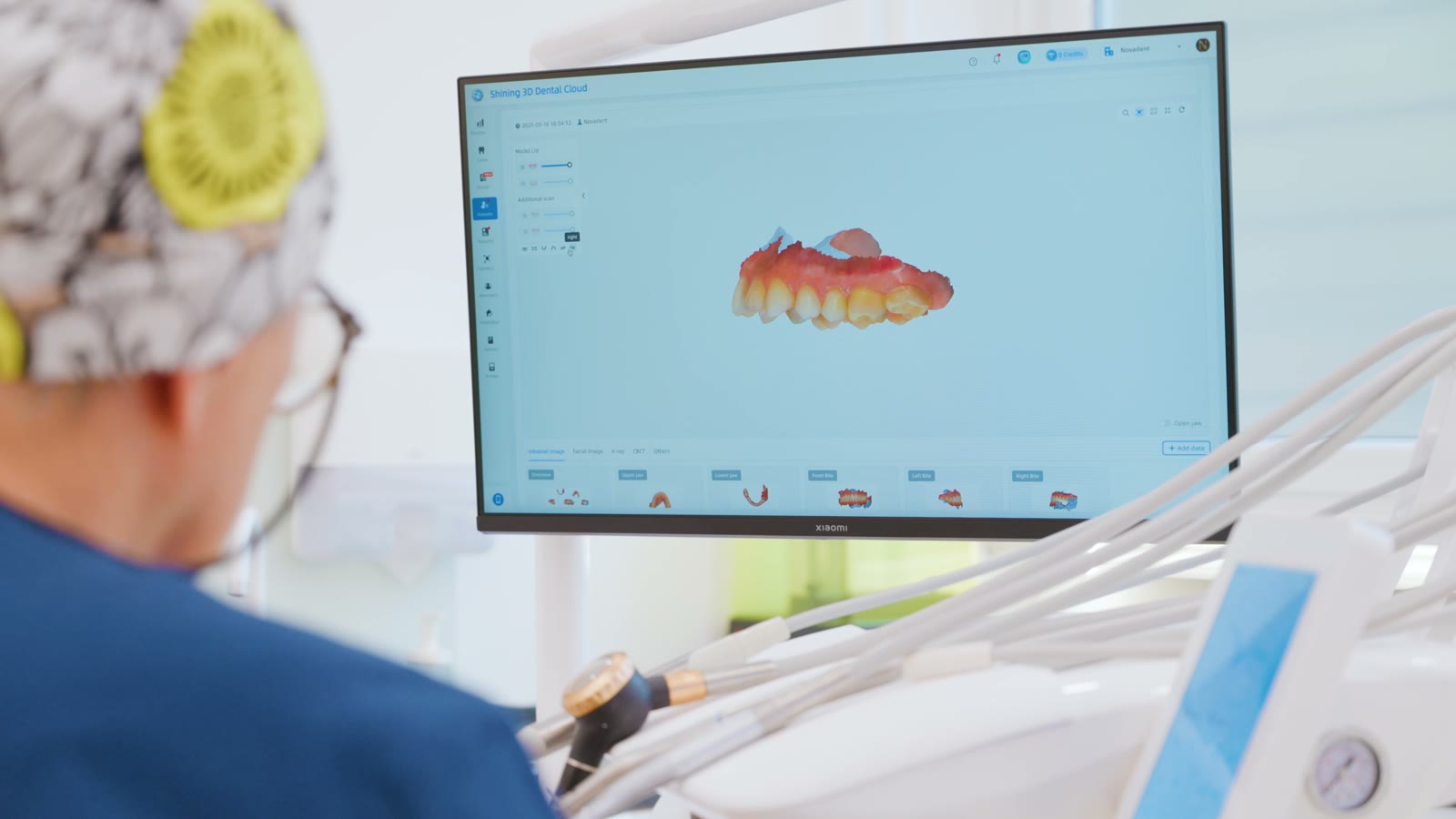
- A scan instead of an impression. An intraoral camera captures the tooth in colour and builds a 3D model within minutes. No trays, no paste, no gag reflex.
- Design in software. The crown is engineered on screen, with contacts and bite verified digitally — more precisely than hand and wax ever could.
- A mill inside the practice. The machine carves your crown from a zirconia block while you drink a coffee in the lounge.
What it means for you
- One visit instead of two or three. Preparation, scanning, production and fitting usually fit into a few hours.
- A better fit. The digital chain removes impression distortion — the crown margin seats without gaps, which directly lowers the risk of decay underneath.
- No temporary crown falling out at dinner.
Is every crown a same-day crown?
No — and it is fair to say so. Long-span bridges, implant work and cases needing root canal therapy require extra steps. But even then, digital production shortens the process from weeks to days — which matters most to patients flying in from abroad.
Considering a crown? See how CAD/CAM crowns & bridges work, or book a free consultation — we will show you the entire process in person.